
India's telecom sector has been through dizzying peaks, troughs, policy U-turns, court battles, brutal competition, and daily controversies. India could go back to a private sector duopoly with just Reliance Jio and Bharti Airtel surviving the mayhem. The third player, Vodafone Idea, could be history.

Companies say that unlike in the US and other countries, in India the high cost of rentals and lower ticket price makes it unviable to run an operation without half the seats available for sale.

Chingari, Roposo, Khabri and Trell are seeing huge traction as people are looking at options to earn incentives from home. Music streaming app Gaana, which is strongly placed in the market with 150 million users, recently opened up its short video platform for subscribers.

Reliance is leveraging the technological change of building a virtualised 5G network which would see the current hardware-dependent networks shift to software-centric platforms.

Apart from digital advertising revenue, both companies want to reach out to the 'next billion' Indian customers. After all, around half of the 1.3 billion population is still not on the net and this represents a challenge as well as an opportunity.

There are several discussions going around in the e-health sector for consolidation with key players being PharmEasy, 1mg, Medlife and Netmeds. According to reports, Reliance Jio is in talks with Netmeds to acquire the latter.
According to software company Mavernir, the new virtualised networks would lead to a saving of 40 per cent in capex and 34 per cent in terms of lower operations cost for operators.

Beside RIL's Jio Switch and Jio Browser, smaller Indian app companies who have been overwhelmed by TikTok are again seeing a big rush - even though till the second week of June they might not have been even listed in the top 100 apps in the country.
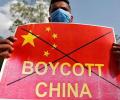
The Indian authorities feared that these apps were transferring consumer data to locations outside the country, especially China, in an unauthorised and surreptitious manner. With servers in India, the data of local consumers would be stored in the country.

JioMeet, which has already got the endorsement of top government officials and politicians, saw a huge surge in its ranking on Google Play, based on its downloads.

The idea behind starting Chingari is not to build a TikTok clone but to position itself as a super app for India like WeChat.

The mobile phone manufacturers are planning to plead with the government that the new rules suggested by the DoT could leave them with no option but to stop introducing new phone models in the country if the stringent rules are eventually approved.

Globally, the focus has moved back to India, especially in terms of telecom assets. Vodafone Idea, with some 300 million customers, continues to be attractive with shares available at a low price.

While participation of start-ups in the space sector has largely been minimal so far, their involvement will be key towards building India's very own aerospace companies such as Maxar, Elon Musk's SpaceX and Rocket Labs, according to experts.

To stay on course with their academic calendars, several steps for graduating batches and fresh incoming batches are being taken.

Among the options being weighed are discounts on existing rentals, short-term deferrals, and 50 per cent waivers.

As several premium hotels such as ITC, Taj and Oberoi reopen after the lockdown in cities such as Bengaluru, Kolkata and Hyderabad, many changes have been made for the safety of guests and staff including temporary closure of spas, bars, gyms, and swimming pools.

Steel, cement, aluminum, fertilisers, tractors, two-wheelers, beverages and carbonated drinks, tyres and FMCG could see demand back to near normal levels by the third or the fourth quarter of the financial year, or even earlier.

Gulabo Sitabo was made with a budget of Rs 40 crore to Rs 45 crore. Amazon Prime bought the streaming rights for Rs 60 crore to Rs 65 crore, helping the producers make over Rs 20 crore.

The coronavirus pandemic has changed how businesses look at payments. Earlier, fintech companies said when they were talking to merchants, they were not interested in digitisation.
 © 2026 Rediff.com - Advertise with us - Disclaimer - Privacy Policy - Sitemap - Feedback - About us - Terms of use - Grievances